Most office equipment mistakes aren't about the equipment. They're about the stuff around it — the form factor, the drivers, the setup. That's the pattern behind the $14,000 in purchasing errors I've documented in six years of managing tools for a 40-person architecture firm.
Here's the short version before the stories: If you need a Casio calculator, Staples is fine as long as you check the physical size and button spacing before ordering. If you need a laser printer, check the driver page before you check the speed specs. And if you're setting up any 3D printer for office use, learn how to calibrate a 3d printer before filament touches the nozzle.
I'm not claiming to be an IT expert or a print specialist. I'm the person who buys things for the office, sets them up, and too often learns the hard way why a model number isn't enough. I've personally made and documented 23 significant equipment mistakes. The total wasted budget is roughly $14,000. I now keep a checklist that has caught 47 potential errors in the last 18 months. This article is essentially an archive of the three dumbest ones.
The Casio Calculator Mistake
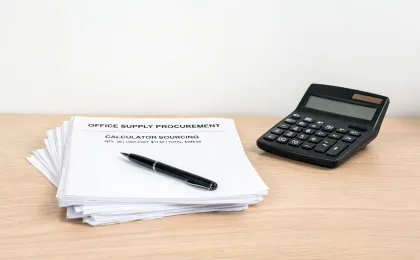
In January 2021, our accounting team asked for ten replacement calculators. I went to Staples' website, searched "casio-calculator" and found a Casio model on sale. I checked the brand, the number of digits, the functions, the price. I didn't check the width or the key pitch. It turned out to be a pocket calculator Casio model. You know the kind — the one that fits in a shirt pocket, but feels toy-sized on a desk.
The boxes arrived. I unboxed one and immediately knew something was off. It wasn't a bad calculator. It was the wrong kind for the job. Looking back, I should have pulled out a ruler and compared it to the existing units. At the time, I assumed the model number meant the same body design as our old ones. The numbers said "compatible." My gut said "wait, that's tiny." I ignored my gut. I've learned to trust that feeling now.
For anyone searching "casio calculator staples," the product photos can be misleading. The Casio scientific range includes dozens of models that look almost identical at thumbnail size. The difference between a desktop-friendly unit and a pocket calculator Casio model is usually hidden in the specs list — width, depth, weight, and key pitch. Staples product pages (as of April 2025) show these details if you scroll down. It takes thirty seconds.
Neither the calculator nor Staples caused this. I caused it by not reading past the headline specs.
The Laser Printer Driver Trap
A year and a half later, in September 2022, I made a variation on the same mistake. We needed a new laser printer for the front desk. I compared page-per-minute speeds, scan resolution, and network options. The model I picked was a Brother, and I decided that was enough. I didn't think about drivers until after I put the box on the network.
Then the printer refused to show up in Windows 11. I'll save you the long troubleshooting saga. The Brother printer drivers available for our build were buggy, or maybe the connection mode was wrong — honestly, that's outside my expertise. What I know is that the printer sat in place for two weeks while our IT contractor patched things together.
Are all Brother printers going to have driver issues? Probably not. Brother's support pages are generally solid, and I've ordered Brother hardware before without incident. But "generally" isn't "always." For any laser printer, I now check the support page for current drivers and note the exact Windows version compatibility before I add it to the cart. It's not a glamorous step, but it's the difference between a two-hour setup and a two-week delay.
The 3D Printer Calibration Thing
The third mistake was the most avoidable. In March 2023, one of our studio leads asked about a 3D printer for prototypes. I bought a mid-range model, set it up, loaded the filament, and sent three files to print. All three failed. The first was a stringy mess. The second warped in the middle. The third just didn't stick to the bed. I blamed the filament, then the room temperature, then the machine.
It was me. I had never learned how to calibrate a 3d printer. The name sounds like one task, but it's really three: level the bed, set the Z offset (the distance between the nozzle and the bed), and calibrate extrusion. My printer had a supposedly auto-leveling feature, but it couldn't fix a Z offset that was wrong by two millimeters.
Once I watched a 20-minute calibration video and followed it, the fourth print worked. The hidden cost wasn't the machine. It was the time I wasted because I skipped the basic setup step. If you're an office manager like me, searching "how to calibrate a 3d printer" before making any promises is cheap insurance.
The Same Pattern
That's when I saw the pattern. All three failures had one thing in common: I bought the object without paying for the context around it. The calculator, the laser printer, and the 3D printer were all fine products. They just weren't right for what my team needed because I ignored the ecosystem.
My pre-purchase checklist now looks like this:
- What specific job will this device do every day? Not "calculation," but "six hours of spreadsheet data entry by an accountant."
- Where will it physically live? A desk? A shelf? A pocket? The answer changes the acceptable size.
- What does setup require? Drivers, calibration, software updates, network permissions?
That checklist has caught 47 potential errors so far. None were fancy catches. They were all cases where someone had picked a product by brand and price without checking the details I'd missed before.
When This Advice Doesn't Apply
Before you take this too far, here's the honest counterpoint. Not every purchase needs this level of paranoia. A basic pocket calculator Casio model for a field trip? Buy it and move on. A laser printer for a team that has an IT support person available the same day? You're probably fine. And if you already calibrate 3D printers as part of your normal day, you don't need this advice at all.
My experience draws from about 30 office tech purchases in a mid-sized architecture studio. If you're in a hospital, a school district, or any environment with stricter IT requirements, your checklist should be deeper. I'm not a procurement expert or a technician. I'm just the person who now reads the fine print before pressing "add to cart" — and wants you to avoid the same expensive hour of realization.
Bottom line: The device in your cart is only half the purchase. The other half is the size, the drivers, and the calibration it demands. Check those before you buy, and the Casio calculator, the laser printer, and the 3D printer will all do their jobs. Skip it, and you'll write a post like this.

Elena Baptista
Elena Baptista is an office printing and imaging analyst covering laser and inkjet printers, multifunction devices, copiers, label and receipt printers, ink cartridges, toner cartridges, and drum units. She applies ISO/IEC 24734, ISO/IEC 24711, and ISO/IEC 19798 methods while comparing print speed, first-page time, duplex throughput, duty cycle, page yield, coverage assumptions, resolution, color consistency, energy use, and maintenance intervals. Her guides help offices, schools, dealers, and procurement teams match output volume, media handling, connectivity, consumable economics, service access, and fleet-management requirements.