Five Minutes of Verification Beats Five Days of Correction
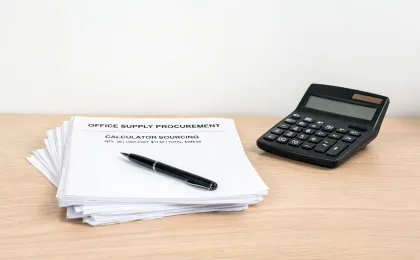
I manage procurement for a mid-sized organization that supplies schools and field teams. I've handled equipment orders for six years and made eleven significant mistakes. Together they cost roughly $5,200 in wasted budget, restocking fees, and rushed reorders. I started documenting each one after the third, because that was the one where my supervisor asked: what's your process? I didn't have a good answer. This article is the checklist I wish I'd had before that conversation.
The first big mistake was a Casio calculator order. I knew I should verify the exam board's approved model list, but thought: we've ordered Casio before. How different can it be? The difference was 60 calculators that didn't match the new list. The units looked right on the warehouse shelf, but they wouldn't be allowed in the exam room. That was $1,650 of inventory I had to return, plus a $75 restocking fee and a two-week delay before the correct units arrived.
There Is No Single Best Casio Calculator
Here's the unpopular part: there's no universal answer. The right choice depends on who will use it, where they'll use it, and what they're allowed to use. I split ordering decisions into three scenarios. Once you know which one you're in, the model list gets short.
If It's For a Classroom or STEM Lab
For most high school and first-year university students, I'd start with the Casio solar scientific calculator line. The fx-991EX, and its newer sibling fx-991CW, has 552 functions and dual solar/battery power. That's more than enough for algebra, calculus, physics, and statistics. Price is usually $18-$25 per unit (based on major retailer quotes in January 2025; verify current pricing).
I've also learned to mention the free tool route. Search for 'scientific calculator Casio online free' and you'll find browser-based emulators and web calculators. They're useful for homework checks, but don't make them the primary tool for a classroom where the final exam requires a physical calculator. Students need to learn the button sequence on the actual device. So I order one for every student, plus one spare per classroom. That spare saves me every time.
If you're also ordering a Creality 3D printer for a STEM lab, remember the machine price is not the budget. A $250 printer plus filament, spare nozzles, tempered glass bed, and a fireproof cabinet adds up fast. In my first grant review, the department bought the printer and forgot the filament. The print quality failure that followed was predictable. Add consumables to the purchase order.
If It's For a Finance or Engineering Office
For accounting and finance teams, the best Casio calculator is usually a desktop printing calculator. The DJ-120D or DJ-240D gives you a 12-digit display, a fast printer, and keys that hold up to heavy daily use. They cost roughly $30-$50 depending on the seller (prices as of April 2025; verify before ordering). But before you buy, ask whether the team needs the printed tape. Some companies have gone paperless and prefer a non-printing display model. I once ordered printing calculators for a department that stored all their work digitally. We ended up with 14 machines with tape rolls no one needed. The unneeded feature didn't break them, but it felt wasteful.
For engineers, the Casio fx-CG50 graphing calculator is a common choice. It has a color display, Python support, and enough memory for most coursework. This was not always the case. The 'you need a $150 graphing calculator' thinking comes from an era when graphing calculators were expensive and scientific calculators had very limited memory. Today, many engineering departments recommend starting with a high-end scientific model and moving to graphing only when the syllabus demands it. That shift has saved students a lot of money.
If It's For Field Teams or Custom Kits
Field crews are a different story. They need something that survives a toolbox, not a desk. In that case I lean toward a rugged Casio calculator, preferably solar, and a protective case. One gadget that always surprises me is the YETI lunch box. It's not technically office equipment, but when we pack field kits, the YETI lunch box is requested more than almost anything else. It's rigid, tough, and keeps food from being crushed in a truck cab. It's also not cheap, so ask the team whether they actually want it before adding one to every kit. A $60 box sitting in a storage closet is money wasted.
What Is the Best Printer?
So, what is the best printer? It depends on your situation, and that's not a dodge. For mostly text documents, a duplex laser printer is cheaper per page than an inkjet. If you need color handouts or custom branded materials, an online print provider is usually more cost-effective than maintaining a color laser printer. Online printers like 48 Hour Print work well for standard products, quantities from 25 to 25,000+, and standard turnaround. They're less ideal for custom die-cut shapes, quantities under 25, or same-day local pickup. Think about the job, not the hype.
For label printing, especially for office assets or calculators, a thermal label printer saves a lot of frustration. And for 3D printing, that's a different animal. A Creality 3D printer is a reasonable entry point for schools and small teams, but it's still a tool that needs trained users and maintenance. There is no best printer for everyone. There's only the best printer for your actual workflow.
How to Know Which Scenario You're In
Here's a short set of questions I now use before every order. They take about ten minutes and have stopped more than one mistake.
- For any scientific calculator: are students allowed to use it on the exam? Get the current approved list, not last year's.
- For a desktop calculator: does the team actually use the paper tape? Does the keyboard layout match how they work?
- For a 3D printer: is someone trained to operate and maintain it? Is filament in the budget?
- For a lunch box or field gear: will it fit in their workspace? Is it wanted, or is it a generic item they'll ignore?
- For printers: what are you printing, at what volume, and in what colors?
That last line is the mistake I made most often in my first two years. I'd choose a product because it looked good on paper, not because it matched the people using it. The numbers said buy the cheapest option. My gut said something was off. I ignored my gut once, and the resulting support delay cost more than the savings. Now the rule is simple: sample one before you order 50.
The best part about this checklist is that it doesn't need to be elaborate. Five minutes of verification beats five days of correction. The 12-point checklist I created after my third mistake has saved us an estimated $8,000 in potential rework. Not bad for a Word document.
If you're putting together an order right now, identify your scenario before you compare models. Classroom orders start with the approved list and the Casio solar scientific calculator. Finance and engineering orders start with the user's workflow. Field kits start with durability and actual preference. And if you're asking what is the best printer, answer the volume question first. That's the entire strategy.
Elena Baptista
Elena Baptista is an office printing and imaging analyst covering laser and inkjet printers, multifunction devices, copiers, label and receipt printers, ink cartridges, toner cartridges, and drum units. She applies ISO/IEC 24734, ISO/IEC 24711, and ISO/IEC 19798 methods while comparing print speed, first-page time, duplex throughput, duty cycle, page yield, coverage assumptions, resolution, color consistency, energy use, and maintenance intervals. Her guides help offices, schools, dealers, and procurement teams match output volume, media handling, connectivity, consumable economics, service access, and fleet-management requirements.