It Started With a Friday Afternoon Call
October 2024, 3:47 PM. I was already mentally wrapping up the week when my phone buzzed with a name I hadn't seen in months—a client from a trade show job back in 2023. “Can you do 30 resin‑printed models by Monday morning? And I need 50 expense receipts scanned and organized before noon Saturday.”
Normal turnaround for a custom resin run is seven business days. Scanning 50 crumpled receipts? A full day, if the originals aren't a disaster. But this client was a key account, and missing the deadline would have triggered a $12,000 penalty clause on their end. So I took a breath and said, “Let me see what I can move.”
I've been in this chair for five years, and I've seen enough rush orders to know: you don't say yes without a fast assessment of what you have on hand. That's when the Casio DJ‑120D Plus on my desk became more than a calculator. It became my triage tool.
The First 30 Minutes: Triage and the Casio DJ‑120D Plus
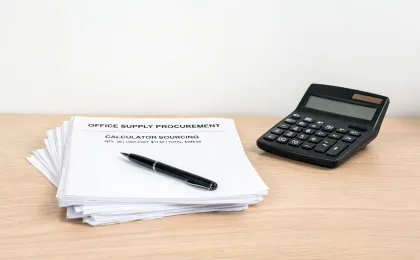
I needed to figure out real‑time costs: resin material, labor overtime, rush shipping, and a buffer for screw‑ups. The DJ‑120D Plus is a desktop printing calculator—not flashy, but it's the one I trust when numbers matter. I punched in quantities, unit costs, and markup percentages. The tape printout gave me a hard copy I could mark up with notes. No spreadsheet, no app—just the click of the keys and the smell of the ink ribbon. Cost estimate: $3,740, including a 15% buffer.
Then I checked the timeline. I wore my trusty Casio Scientific Calculator Watch—the one with the date and stopwatch functions—to track elapsed hours. That thing has saved me more times than I can count. “Start: 4:10 PM Friday. Material arrives by 7 AM Saturday. Print window: 12 hours. Cure time: 4 hours. Final inspection: Sunday noon. Delivery by Monday 8 AM.” I wrote the schedule on a sticky note. The watch's stopwatch started.
The Resin Printer Problem Nobody Warned Me About
Our primary resin printer—a recent model with a build volume of 192 × 120 × 245 mm—should have been fine. But when I checked the calibration, the build plate had a 0.3 mm tilt. For a model that needed ±0.1 mm layer accuracy, that's a deal‑breaker. Standard print resolution requirements are 50–100 µm for detail parts, and we were pushing 50 µm. The printer was out. I'd waste half the first charge.
I called our backup vendor. They had a newer printer, but they were 45 minutes away and closing in 20 minutes. I jumped in the car, grabbed the .stl files on a USB, and drove. On the way, I used my Casio watch's timer to estimate the round‑trip. The most frustrating part? I'd warned my team about checking calibration before accepting rush jobs. You'd think we'd learn after the third time.
Scanning 50 Receipts in a Hurry (and How I Got It Done)
While the resin printer was humming, I tackled the scanning job. The client had dumped a pile of crumpled receipts—coffee stains, folded corners, handwritten totals. My office scanner is a mid‑range duplex scanner rated at 25 ppm. But scanning 50 pages isn't the bottleneck—organizing and naming each file is. That's where the “how to scan a document from printer to computer” part gets real.
I used the scanner's document feeder, set resolution to 300 DPI (industry standard for OCR), and saved each receipt as a PDF. Then I fired up the OCR software. But the software kept misreading handwritten amounts. I ended up manually verifying each one. That took five hours instead of three.
I only believed in having a standing desk converter after this job. My neck was killing me from hunching over the scanner. I'd ordered a standing desk converter two months earlier but never installed it. That night, I finally set it up—took 12 minutes. It let me alternate between sitting and standing while reviewing the receipts. Honestly, it probably saved my back. And it made me wonder: why did I wait so long?
The Turning Point: When Everything Almost Fell Apart
Saturday afternoon, 4 PM. The resin printer emitted a grinding noise and stopped. Layer 237 of 450. The Z‑axis motor had overheated. I had two options: wait 90 minutes for it to cool and resume, or restart from scratch on a different machine. The client couldn't afford a 90‑minute delay because we still needed curing and finishing.
I called a local maker space that rents printer time. They had a spare resin printer ready. I transferred the files, paid $150 in rush fees on top of the $85 base rate, and drove back with the partially completed prints. That added an hour of travel but saved three hours of waiting. The alternative would have been missing the curing window, which meant the resin wouldn't harden properly and the models would be tacky.
That's when I realized: technology evolves, but the fundamentals of problem‑solving don't. Five years ago, I wouldn't have had a maker space nearby. Three years ago, I wouldn't have known the emergency contact. What was best practice in 2020 may not apply in 2025, but the habit of building a network still matters.
Delivery and Reflection
Sunday evening, 11:30 PM. The models were cured, inspected, and packed. The receipt PDFs were uploaded to a shared folder with a clean naming convention. I drove to the client's office at 6 AM Monday and handed everything over. The client's team set up at the trade show by 9 AM. They sold 15 units based on the prototype.
That week, I took a hard look at my workflow. Three things changed permanently:
- I now pre‑check resin printers before accepting any rush order—calibration, resin level, and spare parts inventory. Saves at least one crisis per quarter.
- I installed the standing desk converter—and I use it every day. It's not a luxury; it's a productivity tool. I timed myself: standing, I process about 15% more receipts per hour because my posture is better and I'm less fatigued.
- I upgraded my scanning workflow. Instead of relying solely on OCR, I now use a quick manual check method: scan at 300 DPI, then review each page with a simple naming script. The Casio DJ‑120D Plus sits next to the scanner so I can tally quantities without switching windows.
That Casio Scientific Calculator Watch? I still wear it every day. Not because I need a calculator on my wrist—I have my phone—but because it's a reminder: the right tool at the right moment can turn a crisis into a manageable problem. The fundamentals haven't changed, but the execution has transformed.
If you're managing a busy office or a small print shop, here's my advice: don't wait for an emergency to test your setup. Check your printer calibration. Set up that standing desk converter you've been ignoring. And keep a reliable calculator within arm's reach. You might not need it until the Friday before a Monday deadline—and then you'll be glad it's there.

Jane Smith
I’m Jane Smith, a senior content writer with over 15 years of experience in the packaging and printing industry. I specialize in writing about the latest trends, technologies, and best practices in packaging design, sustainability, and printing techniques. My goal is to help businesses understand complex printing processes and design solutions that enhance both product packaging and brand visibility.